Case Studies
Follow the journey from initial questions to research-driven decisions, illustrated through culturally informed, real-world case studies.

Case 1: Facilitating Dual Citizenship by Identifying Process Blockages
1
Setting the Scene
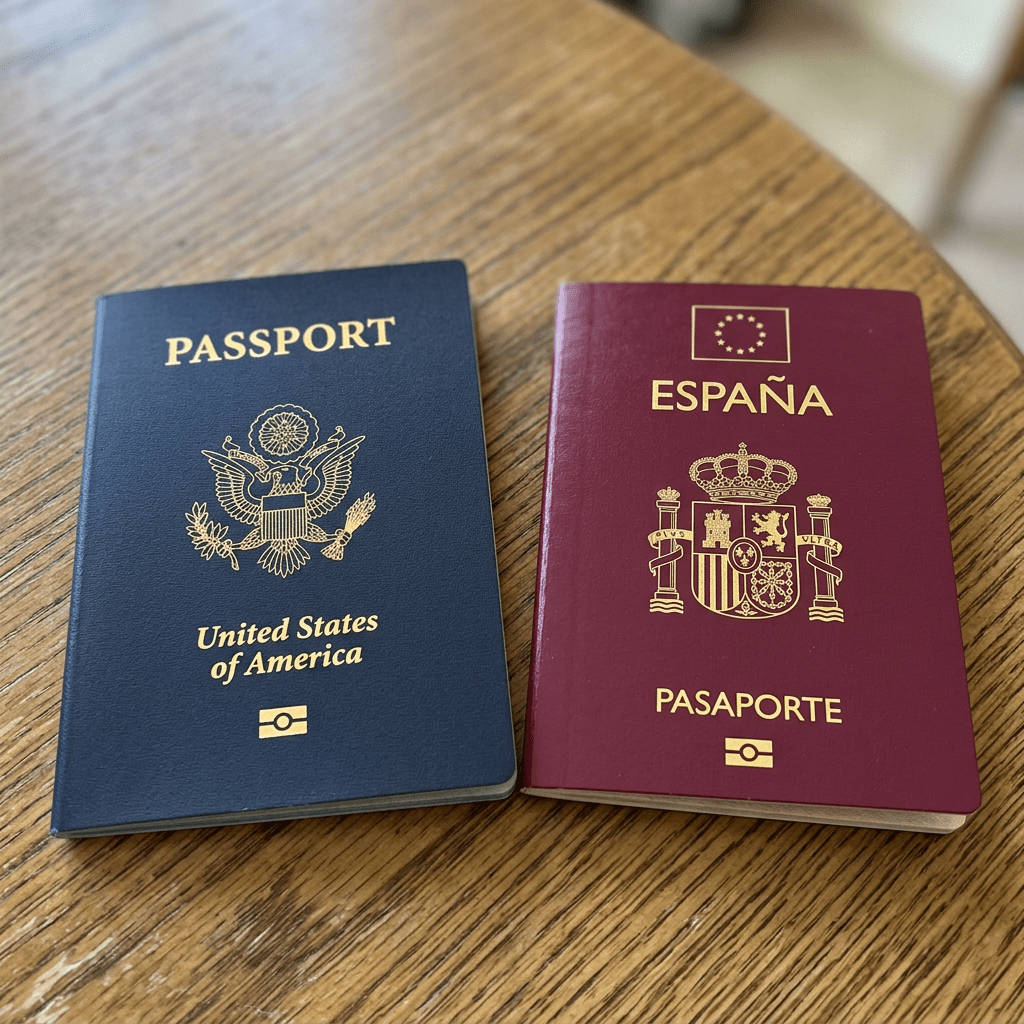
Spain passed a law that would give citizenship to anyone around the world who could prove their descent from victims of the Inquisition. I was hired by an organization in New Mexico (JFNM) to help people prepare and submit their Spanish citizenship applications under this new law. I helped 2000+ applicants from 40+ countries.
The problem? Even though they clearly showed their heritage, hundreds of New Mexican applications were being rejected by the Spanish government.
2
Deep-Dive Research
To identify facilitators of and barriers to application success, I designed and carried out an ethnographic research project that included:
– Participant observation to understand who the applicants were
– Semi-structured interviews to determine their approach to citizenship
– Document review of the application materials to evaluate how the applicants were presenting themselves
– Secondary analysis of publications on the Spanish government to understand how legislators were assessing the applications
– Qualitative coding to find patterns in the data
3
Findings
Application reviewers were looking for people who conformed to a standardized image of Inquisition victim descendants.
New Mexican applicants saw citizenship as validating the unique form their heritage took.
The bottom line: there was a blockage in the approval process caused by a communication gap. The applicants and the reviewers had very different ideas about what the applications were supposed to show.
4
Deliverables and Recommendations
I published the results of my research in several peer-reviewed journals and delivered presentations to a variety of stakeholders, including immigration attorneys in Spain, citizenship applicants and organizations in New Mexico, and students, scholars, and community members. My research resulted in the development of the personas below.
Persona A: Spanish legislator advancing heritage citizenship
– Highly conscious of political tensions and voter pain points
– Worried about Catalan independence movements and other threats to national stability
– Interested in new citizens with deep connections to Spain
Persona B: Spanish government employee evaluating applications
– Navigating frequently changing regulations
– In need of standardized criteria for evaluating citizenship applications
– Concerned about police inquiries into inappropriate approvals
Persona C: New Mexican applying for heritage citizenship
– Felt connected to Spain, but also valued Spanish citizenship as validation of their unique Spanish New Mexican heritage
– Spent significant personal, financial, cultural resources on the application process
– Frustrated and confused by widespread rejection of applications from their state
Unfortunately, Spain closed the heritage citizenship program shortly after it began. However, my research was positioned to increase the success rate of future applications by shifting how my organization advised applicants.
Case 2: Increasing Online Student Retention Rates
1
Context and Problem
I was the regular course instructor for an asynchronous, virtual anthropology course at the University of New Mexico and, previously, at Northern Arizona University. My classes typically had 50-80 enrolled students. However, each semester upwards of a dozen enrolled students stopped logging in and stopped completing assignments after the first few weeks, which led them to fail the class.
2
Solution-Driven Research
To understand why these students stopped participating, I used the following research methods:
– Questionnaire development and deployment to gauge student opinions
– Participant observation to understand the context in which site users were engaging with course materials
– Cross-functional collaboration with university instructional designers to evaluate course design using alternative metrics
3
Results and Changes
I determined that students often stopped logging in because they didn’t sense an instructor presence in the virtual classroom. As the course instructor, I needed to make myself seem more present to better encourage student engagement and accountability.
I began sending consistent class-wide emails outside of the course site. I recorded video lectures to replace lectures that had only included my voice. I reminded students to visit my weekly Zoom office hours.
4
Impact
Student engagement increased significantly. Before implementing the changes listed above, almost a dozen students failed the class. After implementing the changes, that number decreased to only one or two. The research-driven changes significantly improved student engagement, retention, and overall success.

Case 3: Improving Census Results
1
What were national surveys missing?
In 2023, the U.S. Census Bureau reported that a large population of Hispanic Americans did not identify with any of the race categories included in the Census. The Census is used to inform the allocation of government resources, so it is important for its data to accurately depict population demographics.
2
My research
As part of a larger academic research project on Hispanic New Mexicans, I sought out to determine what the Census was missing. My research included:
– Survey development, dissemination, and qualitative analysis to solicit more accurate race/ethnicity descriptors
– In-depth interviews with survey respondents to clarify responses
3
Results
My findings complemented Census Bureau research by showing how categories other than race can affect how Hispanic Americans identify racially. For example, religious affiliation can factor into people’s racial self-categorization.
4
Impact
This research resulted in a publication in a major peer-reviewed anthropology journal. The results helped to document and clarify the diversity in Hispanic American populations in ways that directly responded to the Census Bureau’s research gap, paving the way for a more accurate Census in the future.
 Sarah Leiter